Friday, January 11, 2008

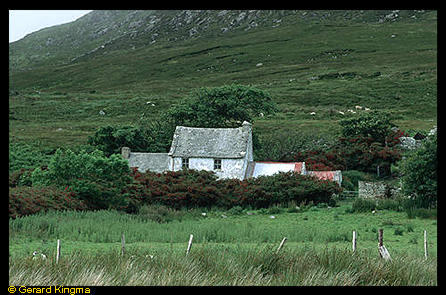
An Clar


I like the craggy, weather-beaten
old men with nicotine stains
on their chapped knuckly fingers
and few remaining teeth. I like
the way they stare at you
with their faraway cynical blue eyes
and take you in, visibly unimpressed
with the ridiculous person you are.
I stand among them, occasionally
forgetting not to smile, nodding
my head sagely, losing the beat,
in my off-the-peg suit, my despicable tie.
They allow me the honour of infrequent speech,
spit, quite politely, to the side,
reserve judgement for the sake of my family,
then mutter, grimly, about the price of sheep.

Wednesday, January 09, 2008

history can kill you


photo by Alastair MacNaughton


coffee-coloured gentlemen
in a mish-mash
of dishdash and Western dress
saunter lazily among
the souks, twirling
prayer beads, car keys,
insouciant,
descended, in part,
from the bashi bazouk
of the Ottoman day,
men without pay, and beaten
like dogs, who unleashed
great fortunes in plunder,
with a bit of casual
relaxing rape on the side,
and went swaggering
along these same narrow
twisting lanes, twirling
severed human heads.

ahh, the good old days

they have been going on,
these good old days,
for quite some time:
Sargon of Akkad;
Tiglath-Pileser;
Darius and Xerxes:
Tamerlane, Saladin,
Saddam Hussein....


Mountains of skulls,
vast pyramids of burning bodies;
and from horizon to horizon
wailing wives and mothers.


Some optimist, occasionally,
marches in from outside,
some fool with visions of conquest:
Alexander, Crassus,
(these, and so many others)
and many leave their bones
strewn across the arid sands: these barren
sun-scorched lands have a habit
of sucking in armies
and draining them dry.

You win the first war rapidly, then slowly lose the second.

It was long before Allenby
entered Jerusalem, on foot,
(unlike the vainglorious
Kaiser before him),
that the European project
was foredoomed: foreign armies
bleed and die, win or lose a few battles,
then politics pulls them out.

Cheerio, Johnny Turk
Au ‘voir, les Bleus
Pip-pip Tommy Atkins


Only Israel remains,
an ideal, an imposed necessity;
a nation composed of hope
and tribal vengeance, thrust
into the heart of the Muslim World
like a poisoned dagger,
supported (glumly) overseas
by vague feelings of ignorance
and guilt.

Now come the Americans,
untroubled, as usual, by history,
obsessed by numbers, technology,
and firepower; unaware (as yet)
that they are losing, dangerously
out of tune with their surroundings,
unaware, also, that they are stranded
in the original killing fields
in the ancient killing fields
where there is tolerance for endless horror.

Saturday, January 05, 2008

fifteen haiku


This is a total misnomer. I'm talking about the title. What we have here is a compilation of 7 senryuu (川柳) and 8 haiku (俳句). I leave it to your judgement to discern which is which. Traditionally, haiku tend to be elevated in tone, more in tune with nature and the passing seasons, whereas senryuu cast a wry and caustic look on human behaviour. Both use exactly the same 5-7-5 syllabic format.

------------------


1.

My private student
shyly exposes her breasts --
what do I do now?

------------------
2.

Millions of insects,
tiny transient tourists --
Japan in summer.

-------------------
3.

Two glasses of beer
and your face goes scarlet red --
school reunion.

--------------------
4.

Dripping ice-cream cones.
Each in summer kimono --
Five little girls.

---------------------
5.

At the funeral
my friend is gone forever
soft cold misty rain.

----------------------

This is not a quiz. It's just a bit of reflective fun. I realize looking at a whole row of haiku one after another gets a bit tiring. My Japanese friends tend to be rather strict in literary matters and would doubtless class all of the five above and the ten to follow as dubious senryuu. I'll tell you why below.

-----------------------
6.

Leaving the office
a whole day of black and white
bursts into colour

-----------------------
7.

at the festival
starlight shines upon your hair
only I can see.

________________
8.

Pale and unsmiling,
avoid like hell by daylight --
nightclub Russian girls.

----------------------
9.

Here comes Jonathan!
May a truck roll over him --
please please let me drive.

----------------------
10.

A life without love
avoids all complications,
leaves you dead and dry.

----------------------

Time for another break from the poems. They are only truly effective in isolation. A string of them rather dilutes their power and takes away their stand-alone presence, their "is"-ness, for want of a better term. My Japanese friends, to continue, believe that only pure poets can write haiku, which means, in effect, that the poet must be Japanese and will most certainly not write in English!! They do have a point. Modern haiku are sclerotic in the sense that they have been surrounded by an accumulation of so many subtle rules that they have become almost impossible to write by any normal non-expert Japanese, let alone a foreigner. This is pure nonsense, of course, as a glance at the great free-wheeling iconoclasts of the 17th century makes immediately apparent. Unpredictability and originality have since come to be discerned as dangerous and negative values in Japan, however, with the concomitant need to ruthlessly stamp them out wherever and whenever they occur in the interests of "Wa" -- national harmony. Hence, to cut a rather interesting story short, the "taming" of haiku, along with everything and everyone else, including the ongoing failure of the educational system and the inability to deal with the iniquities of the imperial past.

-------------------------------
11.

Exploding fireworks --
love strikes at my heart again:
summer kimonos.

______________________
12.

Fanatic patriots,
all with the same half-dazed look --
Yasukuni Shrine.

______________________
13.

Late for work again!
Hurrying, jostle a blind girl,
I am so sorry.

------------------------------
14.

She tells me her name,
says it means "the holy child" --
no, I don't think so.

------------------------------
15.

Sake, more sake,
in cups of fresh-cut cedar --
ooh, the dancing moon!

-------------------------------

Well, I thought we'd never get to the end but we did. No more haiku from me for a while. See if you can separate them out into senryuu and haiku. Right, so. Good luck.

Just out of interest ... let me know if the Japanese characters below show up on your computer. They should. Doesn't mean they will.

じゃあ、皆さんこれで終わりにしましょうか
気を付けて家に帰て下さい
近いうちにまた話しましょう
Sayonara. さようなら

Jaa, minnasan, kore de owari ni shimashou ka?
Kiotsukete ie ni kaitte kudasai.
Chikai uchi ni mata hanashimashou.

Right, everyone, let's finish up here, OK?
Safe home (well, you're probably there already)
Let's talk again soon.
Good-bye.

Ireland in October


The rain spatters
violently, ineffectually,
against the double-glazed windows;
we pull across the curtains
as the evening draws in,
place a few more sods of peat
on the flames of the growling,
crackling fire, then nurse
our drams of single malt.
The whiskey gleams golden
in the Waterford tumblers
as we listen to (yet half ignore)
the shrieks and whistles
of the wild Atlantic winds.

I don't know, says Uncle Liam,
how much of this you understand.

Upstairs
in this whitewashed cottage,
planted, perhaps perversely,
on the farthest edge
of nearly nowhere,
sits a four-poster bed
with sagging springs
in a large cold room
no longer used nor visited;
it is occupied now
by dust and sepia photographs,
but it was in this room
that long dead newlyweds
began the slow
inevitable genesis
of unresolved tragedy.

The lashing rain, the heartless winds,
deride our humanity;
now as in times past,
and in the coming times to be,
they mock our hopes,
our aspirations,
our nationality.

Turbulence, pain, famine, grief.

On the bedroom wall,
housed in an ancient frame,
is a faded stitching sampler:
"God Bless Our Happy Home",
piously, if uncertainly,
accomplished with her own hands
by Emily May MacCarthy
on October 20, 1843,
the fifth of eleven children
and one of the seven
who starved to death
along with her despairing parents.

In the photographs, dapper
gentlemen with large moustaches
stare into an unforgiving lens
with comical expressions
of puzzled defiance;
they stand in front of studio
backdrops, and very
tasteful potted palms.
James Boyle Roche. Photographer.
15 Bridge Street. Ennis

is stamped within an oval
in the corner: the address
still exists, I went to have a look,
it is now a fast-food restaurant.

Wedding couples,
equally unrelaxed, stare
across a canyon of years:
I could not even begin
to talk to these people.
He sits, she stands,
and she places a tentative
restraining hand
upon his rigid manly shoulder.

There is another
strangely out-of-place picture
of my great-uncle Marteen Rua,
the red-haired boy,
shot dead in the civil war;
a cocky 19-year-old
with a cheeky grin,
he is brandishing
an enormous revolver
and has a jaunty cigarette
jutting from his lips.
I can tell from the look of him
we could have had a drink,
we could have had a talk,
he cuts through
all the lace-curtain piety,
the respectability,
the fear: he looks
so devil-me-care, so modern.

But the rain will have none of it:
it comes down in buckets,
it comes down in cascades;
You will never, you will never
never never be free, it says:
in this country you will never
never be released from the past.

Liam is uncharacteristically
subdued; embarrassed, he shifts
from foot to foot in front
of the warm and blazing fire.
We are warmed outside,
and inside, perceptibly,
thanks to the single malt.

Upstairs
there are more old photographs
on the dresser and on the sideboards:
cloche hats on smiling elegant women,
charabancs, baggy suits on the gents,
who grin and squint in the harsh sunlight
of long forgotten days, some of them sporting
those ridiculously shortened neckties:
my unknown, unknowable ancestors.

A flicker of empathy,
of understanding,
slips through
this threnody of regret.

Listen, I think I'm going to bed,
it's been a really long day, I say.
Liam frowns. An awkward
silence ensues: Emmmm ...
Listen to me. There's something
I really need to tell you.
It's about the family ....

Don't.

It will keep for another hundred years.

Friday, January 04, 2008

Inaka


Knee-deep in water
among the mountains
bend and rise
planting the rice seedlings
bend and rise
just like 500 years ago
under the same mountains
living in the same village
bend and rise.
My husband, she says,
doesn't write so well
but he is honest and strong
and our second son
surprised us all.
With a show of metal teeth,
the proud mother,
sun-darkened, shaded
under a conical coolie hat,
smiles like a young girl.
Her second son, she tells me,
goes to college in Tokyo.

----------------------

*Inaka (田舎) - out in the country, anathema to most urban cool young Japanese because that is exactly where their families came from ...

Afterlife


Welcome to the Afterlife --
so sorry you are dead, folks,
but if you would just step this way
we have some exciting
offers and options
and several "eternal" packages
which I am sure
you will find interesting
(my assistants very shortly
will hand out brochures).

Could the Jews
please leave your suitcases, undress
and go to the showers?
Just follow the guide.
You were right all along.
Congratulations.
Thank you, thank you,
just follow the guide
and ignore the dogs,
they rarely bite.

Now, Mormons,
over to my left, please,
so we can fit you up
for your robes and wings;
there's a bit of a cliff,
a precipice, actually,
but I can assure you
that the wings
generally work quite well.

Ahh, Muslims!
Will the men please move over
to the small stinking rooms
where you will remain
for the next seven centuries?
Ladies, into the garden
with these young lusty handsome chaps,
seven each, I believe,
who will fulfill
your every desire.
Yes, yes, of course
you can throw away the veils!

Namaste, Hindu friends!
Over there with the cows
and the monkeys, the elephants
and the kangaroos:
they all speak Railway English.
The Untouchables
(such a quaint endearing term)
will prepare your food
and look after you.

Protestants, oh dear!
We're not quite ready
so, if you wouldn't mind
please gallop along
to this cold drafty chapel
and sing tedious hymns
for the next 300 years
while we do our best
to get back to you.

Catholics, oh so many!
Right, Italians into the restaurant,
Irish and Poles into the pub,
Spaniards and Portuguese
onto the terrace, if you wouldn't mind,
and South Americans
into the carnival tents.
Chileans, if you please,
into the soccer stadium!

Right, who's left?
Pagans, atheists, New Age
California bunnies?
Pick up the brooms
and grab the mops
and clean up the area.
Enya is on Channel Four
on your headsets, the same song
for the next 400 years,
plus forest winds
and ocean waves
and birdsong.
Enjoy!

God is on a business trip
negotiating exchange rights
with Mr Lucifer
but should be back
by tea-time.
He will welcome you all
with a 3-year-long speech
upon his return.

We are negotiating with Hell
to get Fidel
when he drops off from the pod:
he can do the speeches instead of God.

Now we are all settled
and nothing remains to be said.
Aren't you all thrilled and excited
to know you are finally dead?

Thursday, January 03, 2008

Unter die Wellen bleibt bei Dir mein Herz

Frau Elena Proschkow, 88, remembers her first husband, her abiding true love, Kapitan zur See Hans-Christian Meier, commander of the submarine U-263, lost at sea on November 9, 1942.


-------------------------------------------------------

O Christian
how it all comes back --
I can see you now
so young, so eager,
resplendent
in your tailored uniform,
your dark eyes gleaming,
your shy lovely smile,
and the proud glances of your father,
the apprehensive eyes of your mother,
and, there, both laughing and fearful,
little me, three months pregnant
with Johann, our firstborn,
the son you would never see.
Life can be so cruel.

I weep to remember;
I can see it all so clearly
even now, after sixty-four long years,
like a photograph, like an image
burned into my brain;
you, my darling husband,
you, the best of all men,
on the night before you went to sea
for the last time, never, never
to return to the warm bed of love.

We had been married only two years
and your parents had made
some initial old-fashioned fuss,
but you, my dear, had insisted politely,
with the hidden steel of a German officer
(I think they were a little afraid of you)
and I loved you all the more for that.
You made me so happy.

Your father had an eye for a pretty girl
(yes, you smiled when you told me!)
and your mother soon capitulated
when she saw how much I loved you.
O Christian, Christian,
in those early days, we were
so happy together, so proud!

The degenerate filthy French
had been soundly trounced,
and the treacherous arrogant English
were left snarling on their island,
and the new Germany, under Adolf Hitler
was rightly triumphant!

The shame and the stain
of the First War had been erased
(in which my father fell, as you know)
and the German nation, reborn,
was holding a lamp to the world:
Kraft durch Freude, Strength through Joy,
a bulwark against godless communism,
a shining example of truth.

Do you remember, my darling,
the day we first met?
You were a young lieutenant
and I was with the BDM
(I was a leader, you never knew that)
and we were lost in the crowds
the celebrating thousands
cheering for Goering and Der Fuehrer
after the fall of France:
such a day of national pride!

I was pushed this way and that,
lost one of my shoes, such enthusiasm,
and you, my dark-eyed knight
came to my rescue, plucked me forth
from the surging multitudes,
and carried me off for coffee and cakes
at the Adlon Hotel. Such class!
I fell in love immediately.

The courtship was exciting,
but correct and approved,
and we were married within six months
after the usual blood tests
and racial examinations;
I thought my heart would burst
with sheer joy. O my darling!

The War continued for some reason
although everyone knew
we had already won. The British
behaved very badly, in my opinion,
but you fought like a lion, naturally,
gaining a Knight's Cross (First Class!!)
and well-deserved promotion.
Then came your first command.


When you were at sea
I used to pray for you.
In one corner of my little room
(we had to move to your parents
when the cowardly bombing began)
I had a picture of the Sacred Heart,
and in another, the divine Fuehrer,
and with my arms outstretched,
I prayed to both of our saviours.

Keep my Christian safe!

Such joy when you returned,
I would rush headlong to the docks
(along with your mother and father,
now my dear friends, lovingly united
in our adoration for YOU, dear Christian)
and you would hold me in your strong arms,
there in full view of your crew,
lustily cheering and smiling,
waving their caps, whistling:
O how they loved you!

But never as much as me.

In June came the attack on Russia.
We were surprised, but realised
these swine were the real enemy,
the Bolshevik dagger at the throat
of western civilisation: the foul
English, blind to decency and reason,
continued their useless resistance,
and you, my dear, punished them
remorselessly. Your name was respected.
I was proud to be your wife.

I noticed how haggard
you had become; with each
successive homecoming from a patrol
you became more withdrawn, less
enthusiastic for the dream of Greater Germany.
Naturally, I restored your patriotism,
even when you were snappish and surly,
but I was a bit taken aback, darling,
when you removed the portrait of the Fuehrer,
and once (almost) I had the feeling
you were about to strike me:
silly, silly -- my imagination.

America (I mean, really!)
came into the war, and the bombing
became much much worse.
They are such hateful, despicable
opportunists, everybody knows that,
bought off by the British and the Jews;
they are in this war for money, nothing else.
Can't they understand anything?
The Bolshevik hordes want to destroy Europe.
Only Germany can prevent disaster.

Strange news is coming from the East
which I can't believe: the BBC
is spreading vile propaganda
about German actions in Russia.
These people will say anything.
They also say that the Jews,
having been removed for their own safety,
are being eliminated. Nonsense.
Our enemies will go to any length.

I worry about darling Christian .....
--------------------------------------------------
At this point Frau Proschkow broke down and was unable to continue. The news of her husband's death shortly after the birth of their first child is something she still cannot discuss. There is evidence that Frau Proschkow entered into a liaison with an American sergeant after the conclusion of hostilities and was thus provided with food and also cigarettes and nylons which she was able to trade on the black market. Charitably, one must assume that this was done to protect her young son Johann although this relationship seems to have led to an unhealable breach with her late husband's parents. In 1955 she married a prosperous factory owner named Werner Proschkow with whom she appears to have lived amicably until the death of Herr Proschkow in 1970. Johann Meier-Proschkow is now a senior executive with Siemens in Munich. Frau Proschkow lives alone in an apartment in Berlin surrounded by photographs and memoribilia of the early 1940s, most prominent of which are citations from the BDM and two large studio photographs of her first husband in naval uniform. He looks remarkably young.
-------------------------
Notes: Title * Under the waves stays with you my heart (My heart lies with you under the ocean waves)
BDM- Bund Deutscher Maedel - female equivalent of the Hitler Youth.

Wednesday, January 02, 2008

Airey Takes the Plunge

(a restoration drama in several acts)

Airey was a friend in truth,
a fairy, yes, but not a poof;
a tough guy called Reg
threw him off a high ledge.
It's a long way to tip poor Airey.


When I have fears that I may cease to be
far away from friends and family,
I think, by God, although I'm odd,
I welcome change, however strange:
in a cheerful melancholy way,
Death could be a holiday.

In fires forever burning,
on a spit forever turning,
just like a Turkish kebab;
I'm glad I never paid the tab
in so many clubs and bars.
God, won’t they be raging!
the thought is quite engaging:
they’ll be tearing their hair
as if I care
for all them drinks I bought!

I never thought,
I never thought I’d wake up
after I hit the ground
at ten zillion miles an hour.
Splat! That’s that.
Wishy-washy lack of belief
affords but scant and thin relief
for the falling, failing agnostic.
Here is a falsely true acrostic:
Sweet dreams by icy lethal waters.*

The myriad sons and daughters
of O’Leary of the Yellow Hand
have formed a band,
here in the place I’m at.
I told that them I couldn’t sing,
but they want to know what I can bring
to add to the balance of joy.
Where’s God? So sorry, m'boy,
He’s away, he’s always away.
And the Divil’s off in Osaka Japan
to follow up on his business plan,
(An Dhool is no fool)
trawling for souls in a language school.

Listen, will I be dead for a long time?
Just as long as ye like.
On yer bike, resurrect some hobby
and make it last ten thousand years.
Any wee jobby to keep yer mind off things,
but stay away from collecting stamps:
stamp tramps are pure ferocious:
Super Calley Went Ballistic: Celtic Were Atrocious.
Hierophants and sycophants
make me want to wet me pants,
revert to my psychosis.

But can I do that, like?
Wet meself, scratch, play with girls?
No, you can’t. You’re, like, disembodied.
What about this pain in me arse?
Imaginary, old son.
You can keep the pain
but yer arse is dead and gone.
Where’s it gone to, so?
The Soap Factory.

In cold brittle little exchanges
I accommodate myself to certain changes.
Aren’t ye glad ye’re Catlick?
Y’wha?? Fuck you on about?
Even so. You should see the shabby sheds
where they stick the poor sad feckin Neds.
The Jews have chic flats in the Mews
(they were right all along)
Oooh, baby, won’t you shake your thong?
Instruct us, don't you dare amuse!

And them towel heads? Don’t arsk.
I don’t ask. And the Jehovahs?
They’re stuck with the oul’ whores
knocking on doors, forever and ever
and ever and ever. Amen.

Well, I never! This cheers me up
considerably. Jayz, I could
kill for a pint. Are there any pubs in Hell?
Naturallement! As Monsieur knows well
the Squareheads, the Jocks and the Micks
couldn’t die without them. There are Czechs
and balances, mind you, like the Skandies
who have acquired a taste for shaving lotion,
an effective if quite "deadly" potion.
Har, har, a pun. What fun! Listen,
we send people back from time to time,
would you like to go? I don’t know.
Being dead's, like, doin’ in me head,
but it’s not so bad, y’know?
Even so. Pack up and go:
back to the World of the Living.
Cease receiving, son. Start giving.

Right, then, here’s me,
rejected back to Life:
-- Suit, white shirt, necktie: check!
-- Red underpants, socks with clocks: check!
-- Sunglasses, watch, gold chains: check!
-- Cellphone, iPod, 3 rubber johnnies.
Hello there, Life, Allo, Allo!
Jeez, it’s fuckin raining.
I’m out of training.
I’ve forgotten how to talk
I can hardly bleedin walk
sedately; innately, I feel
that none of this is real.

O Jayzus, damn, by heck!
I just got a bang on the back of the neck.
I turn to my oppressor,
a large and hairy male cross-dresser
in a pink tutu and fawn little boots.
Beige, ye barstid, fawn is outré!
but what I really want to say
is 'oo the feck are yoo?
I delivered a thump and a bit of a bump
'coz ye look just like a ghost
mon semblable, mon frere,
are ye back from under there?"

I yam. Right, so, whattya think,
will we call it quits and go for a drink?
Seventeen pints after,
ciggies, girls, and gurgling laughter,
it's home with young Ivy Malone
on the Bakerloo, she don’t live alone.
The thing to do, she tells me,
is climb up the garden ladder
Because I reelly don’t want me fadder
or mudder to see yez. Haul away.
Show a light in the windy, sweet darlint,
show a light where I can see yez,
yer luverly pearl-white arms,
yer full abundant charms!
And here’s a tiny little kiss,
a promise of a night of bliss.

I feel so drained
yet self-contained
as I gaze into the glass:
a faint recognition
of the apparition
I know to be myself.
Dead, mislaid, or on the shelf,
this, too, I think, shall pass.
Her flashing eyes!
Her thunderous thighs!
All in two words explained:
convent trained.
Her legs grab tight-ily,
mightily wrap around my ass:
heave-ho, puff and blow!
Sky is high and ocean deep:
will she never go to sleep?

Ah, it’s not bad to be alive
once more. I can’t remember when
before it felt this cool. A general rule
is to keep the head down low,
and let the winds crack and blow
above you, like young sweet Ivy Malone
breathing hard in her shoebox of a room
up there on Dollis Hill.
I close my eyes, I remember still
her posters of Duran Duran,
the night I was her only man.

Being dead ain’t that bad, either,
once you get the hang of it, like.
The thing is being killed,
being shot or stabbed or smashed to bits
or tossed off a high building;
that’s the bit I don’t much care for.
Reg had hairs sprouting from his nose
and he had a bit of a ripe smell about him,
so when he pushed me off the roof that day
I had a bit of a snob thing about him,
not at all in my league, I’d have to say.

Time to drop in on hairy Reg.
I can imagine his moonlike pasty face
as he takes my presence in.
I’ll slip in the icy uncanny wedge
of fear. Here is a ghost, my dear!
But things seldom work out
quite as one expects: in many respects
Death and Life are both unfair.
I stand before this old armchair
and gaze on Reg, unprepossessing sight,
He’s been out all night,
God, he looks the worse for wear;
wheezing, snorting through his nose,
crumpled-up clothes, drunk as a coot,
one filthy, ugly, smelly brute.

When he wakes up, I’ll top him,
but not until he knows,
not until he really knows.
Then I’ll walk into the hall,
and descend. I need a friend,
have none at all. I was in love
and then I wasn't in love.
I was also once in life,
and then no longer in that.
Snow falls on distant mountains.
Sweet dreams by icy lethal waters.
Drip … drip … drip.

-----------------------------------------------------
* a falsely true acrostic, in that only 22 of the 28 letters are used with an extra 'e' thrown in; seven words.